
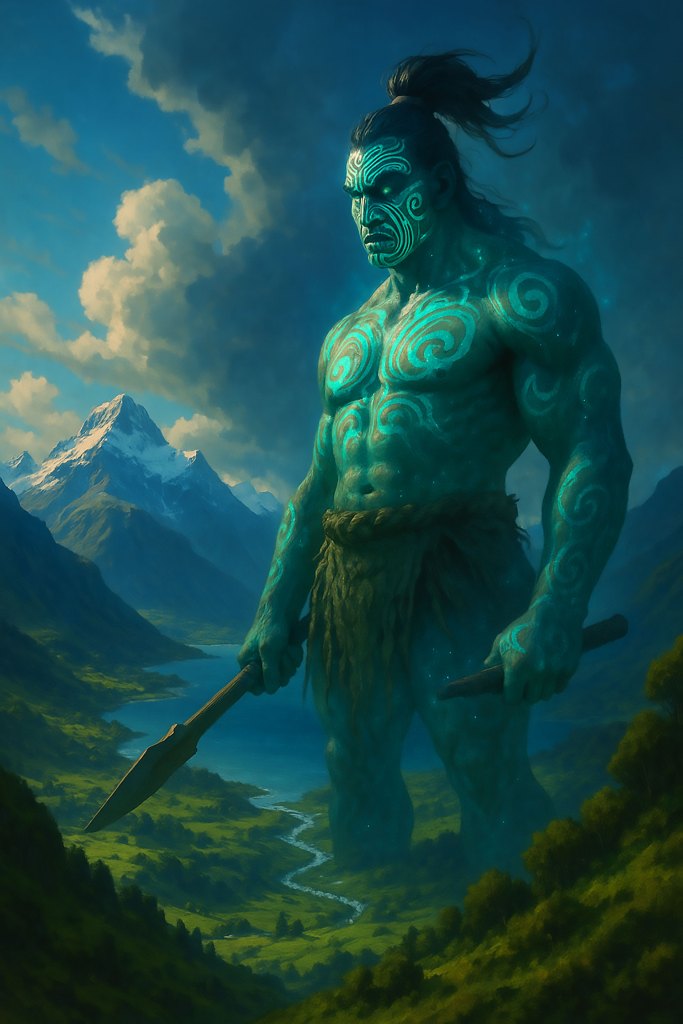
How Did the Māori Gain Voting Rights BEFORE Most Europeans in New Zealand?
Ever wonder how different countries treat their Indigenous communities? Like, really treat them, not just in speeches or symbolic holidays, but in law, education, political power, and everyday life?
I was having this exact conversation recently about New Zealand. The topic? How the Māori, the Indigenous people of Aotearoa, are integrated into modern society. Because on a surface level, to a little-informed outsider, they seem to be incredibly well integrated, especially when compared with other Indigenous communities around the world.
And naturally, the next question came up: How does that compare to Australia’s relationship with its own Indigenous populations?
Let’s dive into what New Zealand is doing, where Australia stands, and why the difference matters more than you might think.
Before the British: Who Were the Māori?
Long before ships with strange sails dotted New Zealand’s coasts, the Māori were thriving. These weren’t loosely connected bands of nomads. The Māori world was rich, built on deeply rooted spiritual beliefs, strict social structures, and intricate relationships between people and land (or as they’d say, whenua).
Each iwi (tribe) had its own rohe (territory), governed by intricate systems of leadership, tapu (sacred rules), and whakapapa (ancestral lineage). Storytelling, carving, and tattooing weren’t just art, they were identity. They preserved knowledge, ancestry, and authority. In short, Māori society was organized, intelligent, and anything but “primitive.”
And they were no strangers to conflict. Inter-tribal warfare wasn’t uncommon, but it followed rules, customs, and honor codes that helped maintain balance, until muskets changed the game.
Warfare, Muskets, and Strategy: The Māori Advantage
Let’s be clear: when the British arrived, they didn’t find a people easily cowed. Māori warriors were battle-hardened, tactical, and terrifyingly effective.
They had spent decades fighting in the Musket Wars, a brutal chapter where tribes traded for guns and waged increasingly deadly battles over land, mana (status), and utu (retribution). These weren’t chaotic skirmishes. They were organized campaigns. And Māori had developed brilliant military architecture too, fortified hilltop settlements called pā that were later cleverly adapted to absorb and resist cannon fire from British forces. That’s right: they reverse-engineered their defenses in real time.
Māori leaders also understood politics. They negotiated with missionaries, formed trade agreements, and kept a close eye on settler movements. Some iwi even sent their people overseas to learn English and gather intel. So when the British Crown started pushing for control, it wasn’t a walkover.
In fact, Māori military and strategic power is one of the reasons the Treaty of Waitangi was signed in the first place. The British wanted sovereignty, sure, but they knew full-scale conquest would come at a high price. The treaty was, at least in part, a diplomatic move to avoid that.
After the Treaty: A Promise Broken, A Fight Renewed
The Treaty of Waitangi, signed in 1840, was supposed to be a deal, a partnership between equals. But it didn’t take long for things to fall apart.
The English version said Māori ceded sovereignty. The Māori version? It spoke of shared governance and protection of land and tino rangatiratanga, absolute chieftainship. That single linguistic gap would crack wide open in the years to come.
As settlers flooded in and the Crown claimed more land, tensions escalated. Māori protested, resisted, and when necessary, fought. The New Zealand Wars broke out, a series of brutal conflicts that left scars on both sides. Māori lost vast tracts of land through confiscation, dubious purchases, or outright theft. Entire communities were displaced. Cultural suppression followed.
And yet, they didn’t disappear.
Māori leaders took the fight into politics and the legal system. They lobbied. They formed movements. They never let the Treaty be forgotten.
Today, that persistence lives on in the Waitangi Tribunal, land settlements, Māori seats in Parliament, and a society where Te Reo Māori is once again heard in classrooms and on national news. The past isn’t perfect. The present isn’t either. But that arc, from fierce independence to broken promises to relentless advocacy, is what makes Māori integration in New Zealand so unique.
So, What’s New Zealand Actually Doing Right?
Let’s start with the basics: New Zealand has something pretty rare when it comes to Indigenous relations, a formal agreement. Back in 1840, the British Crown signed the Treaty of Waitangi with many Māori chiefs. Now, was it perfectly honored? Not even close. But it exists, and that alone sets the stage for a different kind of relationship.
You’ll feel it when you land in the country. Street signs in two languages. Schools teaching Te Reo Māori, the Māori language. National events that start with traditional Māori blessings. This isn’t window dressing; it’s embedded into daily life.
A few things really stand out:
- Māori language is official. Not just preserved in some dusty archive, official. It’s on the news, in schools, in Parliament.
- Political representation? Guaranteed. Māori have reserved seats in New Zealand’s Parliament, which means their voices are baked into the system.
- Cultural presence. The haka isn’t just a rugby thing, it’s a proud, visible expression of identity that the whole country embraces.
- Historical justice. The Waitangi Tribunal was set up to investigate breaches of the treaty. It’s not perfect, but it has led to land returns, financial compensation, and official apologies.
None of this means things are flawless. Māori communities still face challenges, especially when it comes to health, education, and income. But when you look at the structures in place? New Zealand is trying. And that effort, especially when compared globally, feels… different.
Early Votes, Ongoing Voice
Here’s something surprising: Māori men were given the right to vote in 1867, decades before most European men in New Zealand. Through the Māori Representation Act, four dedicated seats in Parliament were created, giving Māori a direct voice in national decisions.
Fast forward to today, and those seats still exist.
It’s more than symbolic. It’s a thread of political recognition that’s never been fully broken. While far from perfect, this early inclusion helped carve out space for Māori voices in lawmaking, education, and cultural life, a space Indigenous Australians are still fighting to secure.
And that difference? It shows. Every time you hear a haka at a rugby game, see Te Reo Māori on street signs, or watch Māori MPs speak in Parliament, you’re seeing that legacy in action.
Australia and New Zealand: Same Colonizers, Very Different Paths
So now that we’ve walked through the Māori experience, from a rich pre-colonial culture, to fierce military resistance, to a treaty that (while flawed) still acknowledged their existence, let’s head across the Tasman Sea.
Australia’s Indigenous peoples? They faced a completely different game.
The First Contact: Treaty vs. Terra Nullius
Here’s the first big fork in the road. In New Zealand, Māori signed the Treaty of Waitangi. It wasn’t perfect, but it was a formal agreement between sovereign peoples.
In Australia? No treaty. No negotiation. The British declared the land was terra nullius, nobody’s land. Think about that. Entire nations of people were already living there, with cultures tens of thousands of years old, and they were legally invisible.
It wasn’t just a legal slight. It was a mindset. One that shaped everything that followed.
Resistance and Recognition
Both Māori and Indigenous Australians resisted. But while Māori were seen as a military force to reckon with, armed and organized, Aboriginal resistance was often localized and brutally crushed.
Why? Geography played a part. Māori were concentrated in well-established iwi with access to the sea for trade and mobility. Aboriginal communities were diverse and spread across a vast continent, making united resistance harder.
And because the British never negotiated with Aboriginal peoples, they didn’t recognize any legal standing. That left Australia with no equivalent to the Treaty of Waitangi. It wasn’t until 1992, yes, 1992! That the Mabo case overturned terra nullius and acknowledged Native Title. That’s over 150 years after the Treaty in New Zealand.
Integration (Or the Lack Thereof)
Now let’s talk about what happened after colonization set in.
In New Zealand, the Treaty created a reference point. It was violated, yes, but Māori leaders could, and did use it to fight back through politics and courts. Fast-forward to today, and Māori have:
- Reserved seats in Parliament
- A tribunal dedicated to historical grievances
- An official language (Te Reo Māori) taught in schools
- Cultural practices embedded into national identity
Australia? It’s catching up, but much more slowly.
- There are no reserved Indigenous seats in Parliament.
- Recognition of Indigenous peoples in the Constitution? Still hasn’t happened (though it’s been heavily debated).
- Many Indigenous languages and cultures are critically endangered.
- The Voice to Parliament referendum, intended to give Indigenous Australians a formal advisory role, was just rejected in 2023 by a national vote. That says a lot about where things still stand.
The Human Cost
Let’s not sugarcoat it, both countries have deep wounds.
Both Māori and Indigenous Australians suffer from systemic inequality. Lower life expectancy. Higher incarceration rates. Barriers to healthcare, housing, and education.
But the difference lies in what mechanisms are in place to heal those wounds. New Zealand doesn’t get a gold star, it still has a long way to go. But compared to Australia, it has a stronger foundation: a treaty, political representation, and cultural revival that has been formally acknowledged and supported by the state.
So, how did two countries colonized by the same empire end up on such different paths?
The answer, it turns out, lies in the very beginning. One started with a treaty. The other started with a silence so loud, it’s still echoing today.
The Power of Resistance: Māori Resilience in Shaping Today
Māori history is not just a story of colonization; it’s a story of resilience, strategic brilliance, and unwavering resistance. From the fiercely defended pā (fortified villages) to the strategic military alliances, Māori didn’t just surrender to British colonization, they fought to preserve their autonomy. This resistance wasn’t just about battles on the ground; it was about securing the Māori voice in the future.
This resilience paved the way for the Treaty of Waitangi, a foundational document, flawed as it may be, that ensured Māori were more than just subjects to the Crown. It set a precedent for political representation, cultural survival, and a path toward addressing past wrongs.
While the road hasn’t been smooth and there’s still work to be done, the Māori have carved out a unique, powerful space in New Zealand’s political, social, and cultural landscape. And that’s no accident. It’s the direct result of centuries of resistance and the courage to negotiate for a future where their rights, their language, and their identity are not just acknowledged but celebrated.
So, when we look at the relative advantages Māori have today, political seats, language revitalization, and cultural pride, it’s clear: those advantages weren’t handed to them. They were earned, one battle at a time, and that resilience continues to echo through the generations.
 Slimane Kemiha - Blog
Leave a comment